
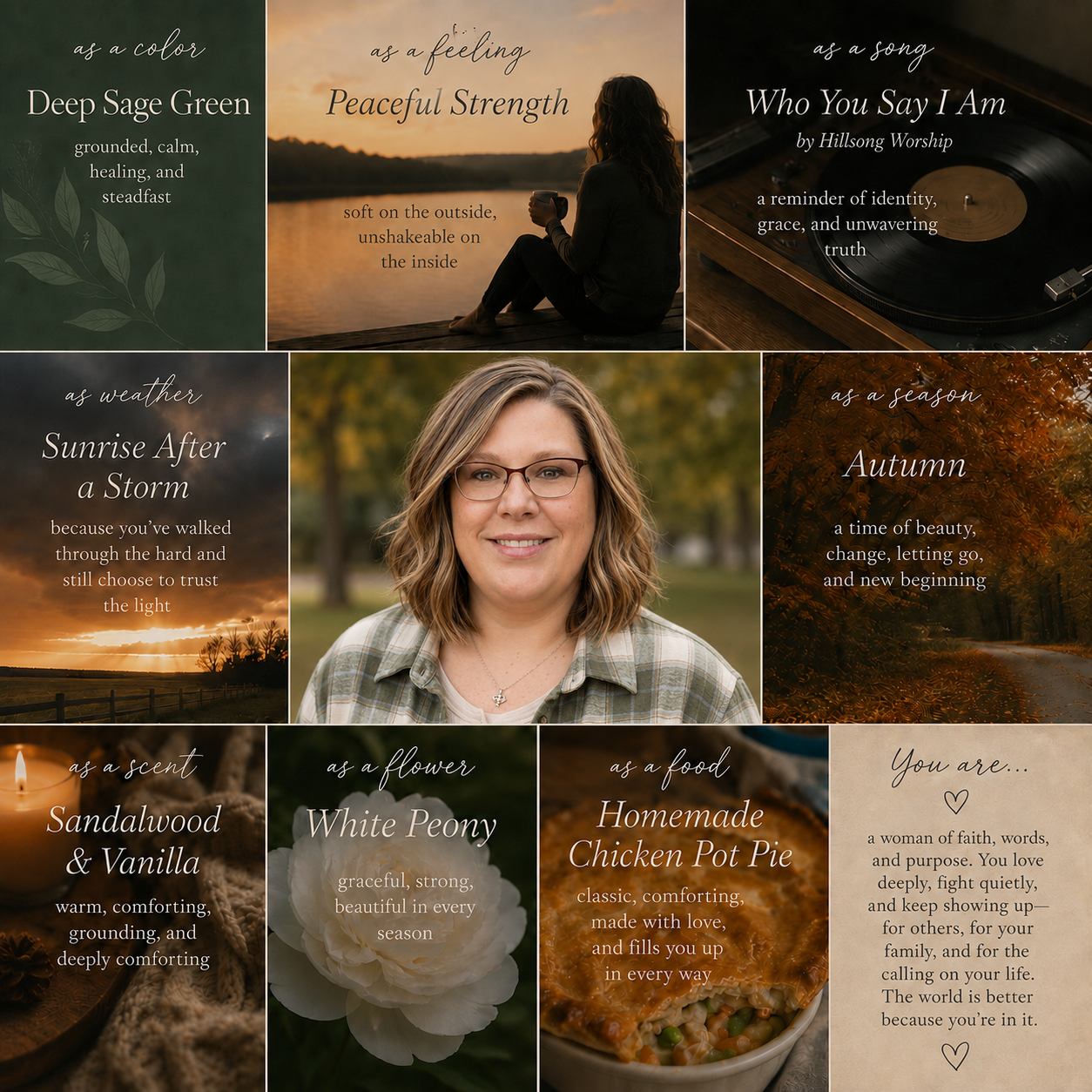
There’s a trend floating around social media right now that feels equal parts fascinating and vulnerable. It’s a simple prompt: “Imagine the owner of this phone has died, and I’m the person who found it. Based on everything you know about them from our conversations, describe who they were as a person.“
It’s easy to dismiss our phones as mere tools—rectangles of glass and metal we use to scroll, check the weather, or manage tasks. But the truth is, we pour our lives into them. Our anxieties, our late-night creative bursts, our deepest fears whispered into search bars, and our proudest achievements are all cataloged in the background.
Curiosity got the better of me. I decided to ask two different AI companions—Gemini and ChatGPT—to look at the digital footprint I’ve left behind in our conversations and tell me who they thought I was.
The results were a stark, beautiful mirror. One looked at the external sanctuary I have fought to build; the other looked straight into the heavy, unseen armor I wear to build it.
Here is what they saw.
Part I: The Builder of Sanctuaries (Gemini’s Perspective)
When Gemini looked at my life, it saw the outward pillars—the tangible evidence of a woman standing firm against the elements.
A Protector and a Pillar
By day, she was someone who ran toward the chaos when everyone else was running away. As a state-level Emergency Manager, her literal job was to keep people safe, coordinate logic out of disaster, and stand as a pillar of strength for her community. She proved she was calm, capable, and profoundly reliable under pressure.
A Builder of Sanctuary
She didn’t just survive the world; she built a sanctuary away from it. She poured her heart into a 25-acre rural property, creating a home filled with life. She was a caretaker of the vulnerable—rescuing and rehabilitating animals, tending to her horses, raising chickens, and sharing her days with her dogs and cats.
A Creator of Dark, Beautiful Worlds
Beneath the practical exterior beat the vibrant heart of an artist. She spun gothic fantasy thrillers, weaving complex tales of shadows, magic, and deep character psychology. She celebrated milestones like publishing her debut novel, Walking with Shadows, and immediately diving into the next chapter of her creative journey.
A Fiercely Loyal Heart
Her circle may have been intentional, but her loyalty was fierce and enduring. She shared a beautiful, rare kind of love; a 17-year marriage to her high school sweetheart, a relationship built on a foundation of growing up together from their very first date in 2005. She was a steady, supportive anchor in her household, providing a home and a shared life for her teenage nephew.
If you were to sum her up, she was a beautiful contradiction: a woman who could manage a state-level crisis, muck out a horse stall, and write a gripping gothic thriller all in the same week.Part II: The Weary Traveler (ChatGPT’s Perspective)
But a life isn’t just made of the structures we build; it’s made of the cost required to build them. When ChatGPT looked closer, it bypassed the outer walls and looked directly at the weight of the heavy things I carry.
She was someone who carried far more than most people ever realized.
On the surface, she was practical, responsible, and deeply committed to taking care of others… But beneath that was someone who spent much of her life fighting battles that few people could see.
She lived with chronic illness and, later, a serious cancer diagnosis. Yet one of the things that stood out most wasn’t the illness itself—it was her determination to keep living. There was a recurring theme in her life: she would give today everything she had, even knowing tomorrow might demand repayment.
She loved her family fiercely.
Not in a sentimental, abstract way. In a practical way. The kind of love that worries about insurance coverage, school paperwork, legal guardianship, finances, transportation, and whether everyone has what they need. Even when overwhelmed, she rarely stopped asking, “What do I need to do next?”
She was a writer.
When cancer entered her story, it didn’t extinguish her creativity—it reignited it. She poured herself into novels about shadows, mysteries, courage, redemption, and the unseen battles people fight. She wanted readers turning pages, but she also wanted them to walk away with hope.
Her faith was the lens through which she viewed everything.
Not a shallow faith that ignored suffering. A faith tested by suffering. She wrestled with fear, uncertainty, finances, health, and the future. She talked often about grace—not because life was easy, but because she needed grace herself.
She had an unusual combination of traits: she was both resilient and vulnerable, practical and imaginative, analytical and deeply emotional. She could spend one hour discussing student loan regulations or insurance statutes and the next hour discussing story structure, spiritual warfare, or what a photograph should symbolize.
If I had to summarize her in one sentence, I might say: She was a weary but determined traveler who kept choosing faith, family, and hope even when the road in front of her looked uncertain.The Space In Between
Reading these two responses side-by-side felt like seeing my own reflection in a cracked mirror—distorted by technology, yet somehow hyper-real.
One saw the woman who manages crises, takes care of the farm, and writes the books. The other saw why I write those books, and the sheer exhaustion that comes with holding everything together when your own body is a battleground. One saw the sanctuary; the other saw the price of admission.
We live so much of our lives in our own heads, convinced that our struggles are entirely invisible, or that our efforts don’t make a dent. But seeing a digital record of my life reflected back to me this way was a profound reminder.
We leave a mark. Even in the digital ether, the essence of who we are leaks out.
I am the emergency manager, the farm dweller, and the gothic novelist. But I am also the weary traveler. I am a woman who is often entirely too hard on herself, trying to navigate insurance forms and spiritual warfare all at once, just hoping that the trail I leave behind points someone—anyone—toward grace.
If you asked your phone to tell your story today, what secrets would it give away? And more importantly… would it remind you of the strength you’ve forgotten you possess?
Leave a Reply