
They say that in emergency management, you don’t wait for the levee to break before you call for help, you watch the pressure gauges. You look for the seepage that tells you the structure is struggling under a weight it wasn’t meant to carry.
Lately, I’ve been watching my own gauges.
For months, I’ve told myself I was just tired. I even started to wonder if I was being dramatic. After a lifetime of being the one who fixes things, it’s hard to admit when you are the thing that’s broken. But I’ve realized that my blood counts are a bit like a deceptive dashboard. The numbers on the screen might look normal, but the car is shaking violently at 60 miles per hour.
You see, Myelofibrosis changes the very shape of your blood. I might have enough cells, but they aren’t healthy. I like to think of them as cars with square tires. They are on the road, they show up in the count, but they aren’t moving any oxygen. They are bumping and thudding through my veins, leaving me breathless and exhausted just sitting at my desk.
And then there is the Factory Fire. My bone marrow, the place where life is supposed to be created, is currently 70% to 80% scarred. It’s like a factory where the production floor is melting and the machinery is fused together. Because the factory is closing down, my spleen has stepped in to try and do a job it was never meant to do. It has grown to nearly 18 centimeters, almost double its size, crowding out my stomach and lungs like an uninvited guest who refuses to leave.
This week, the gauges finally hit the red.
I found myself wrapped in a down comforter in my office, shivering despite the heat. My body has started surging with adrenaline spikes, jolting me awake with tremors because my nervous system is panicked, trying to force-pump that “square-tired” blood to my brain. When my body faces even a small extra stress, like a monthly cycle, it’s like a power grid hitting a blackout. There is simply no reserve left.
I’m learning that there is a difference between complaining and reporting.
Yesterday, as I headed into my appointment and put down the facade. I didn’t go in to tell the doctor I’m fine. I reported that the levee is straining. It’s just us in this lifeboat: my husband, our nephew, and me. And for the sake of our little sanctuary, I have to be brave enough to be honest. I have to admit that I can’t power through a factory fire.
Because you can’t be a sanctuary for others if you’re crumbling from within.
Part 2: The Architecture of Hope
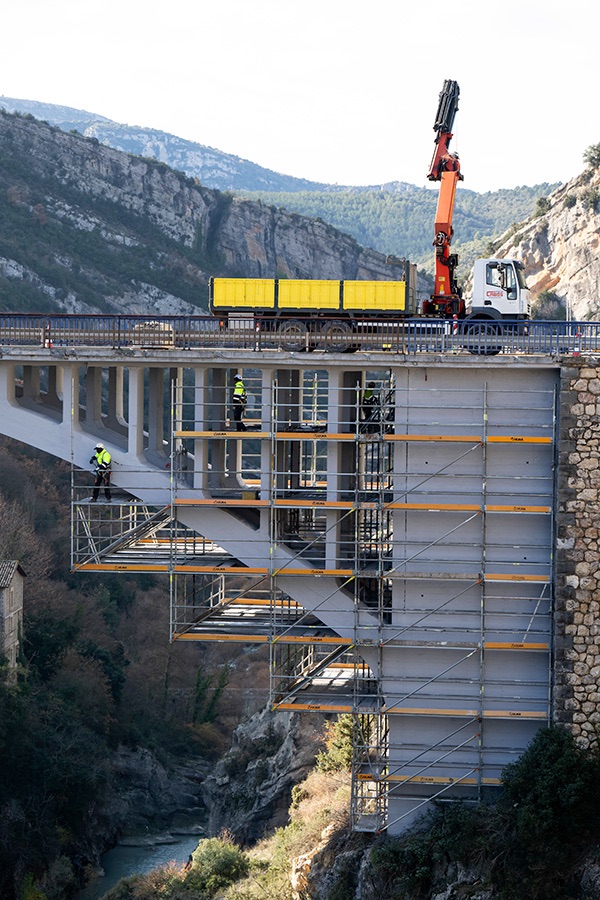
For a long time, I thought being strong meant being the one who never let the bridge sway. As an Emergency Manager, I’m trained to look for the failure points, to shore up the levees, and to keep the traffic moving. But when my own pathology report came back with Grade 2 to 3 Fibrosis, I realized the bridge wasn’t just swaying, the very steel was being replaced by stone.
I’ve spent months questioning my own reality. I felt the bone-deep cold, the “square-tire” fatigue, and the physical pressure of a spleen that had grown to nearly 18 centimeters just to keep me upright. Yet, because I looked fine, I felt like I was exaggerating. I felt the guilt of the support I was receiving because I wasn’t sitting in a hospital bed yet.
But yesterday, something shifted. I sat in a room with a doctor who didn’t just look at my blood counts; he looked at me. He heard about the weakness and he didn’t call it drama. He called it data.
He spoke to me about a 5, 10, and 15-year plan. At first, my crisis-mode brain recoiled. 15 years? I’m just trying to get through the next 15 minutes without an adrenaline surge. But then, I saw the hope in it. For a doctor to look at a Grade 3 patient and speak of a decade and a half into the future isn’t a delay, it’s a declaration of victory. It’s a vision of a life that continues long after the “Big Fix” of a transplant is over.
The Invisible Scaffold
I’ve realized that while my bridge is undergoing a total reconstruction, there is an invisible scaffold holding it up.
• It’s in the almost $3.5k raised by people who didn’t ask for a receipt, but simply wanted to help carry the load.
• It’s in the news that my PCP and his family pray for us, specifically by name, every single night.
• It’s in an oncologist who leads with a hug and listens for a divine nudge before he looks at a lab result.
If you are walking through your own silent disaster today, I want to tell you what I am finally telling myself: You are allowed to be the one who needs the help.
The waiting game is the hardest part for those of us born to be fixers. It feels stagnant to wait for a medication to work or a donor to be found. But I’m learning that the waiting isn’t doing nothing. It’s the process of the Master Builder shoring up the foundation.
I’m starting a new medication today, a pump to keep the water back while we prepare for the new levee. It might be uncomfortable. It might take time. But I am no longer questioning if the struggle is real. I am simply resting in the fact that the Architect has a 15-year plan for this farm, this family, and this life.
The bridge is being rebuilt. And for the first time in a long time, I don’t have to be the one holding up the steel.
Leave a Reply